15% Rent Reduction: Adaptive Modularity in Hollerich and Wiltz
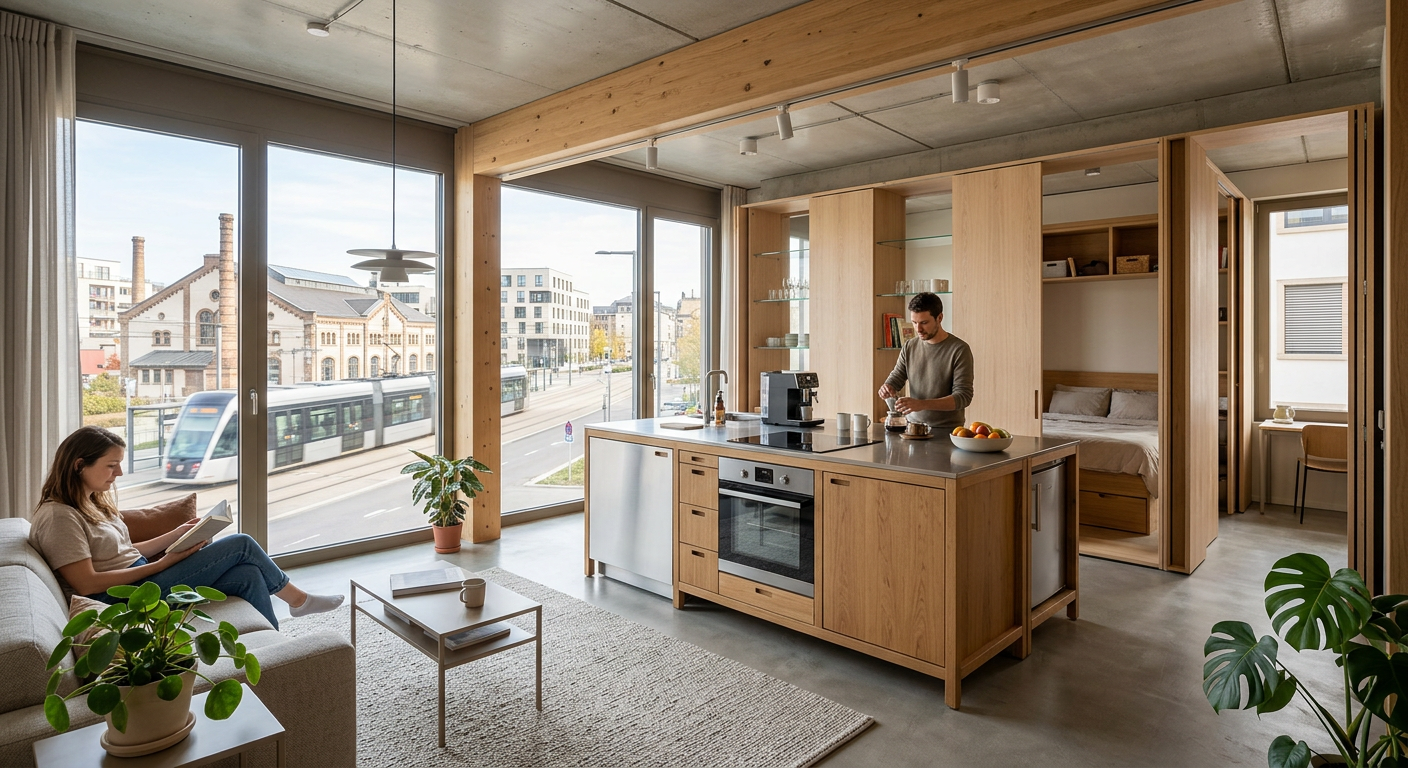
Reducing Rent Through Adaptive Housing in Hollerich and Wiltz
The Luxembourg real estate market is undergoing a profound transformation in 2026. While rents in Hollerich traditionally range between €30 and €38 per square meter [1], a new architectural and legislative approach promises to ease the burden on tenants. The deployment of "adaptive modularity" residences and the use of shared space co-design could lead to an effective 15% reduction in housing costs.
This evolution is part of a context of intense legislative reform. In 2024 and 2025, the Chamber of Deputies increased efforts to regulate rents and protect tenants, notably considering a "Mietpreisbremse" (rent brake) [2].
The 2026 Reversibility Standard: Flexibility for the Tenant
At the heart of this price drop is the "2026 Reversibility Standard." Initially applied to the Hollerich district, this standard mandates total structural flexibility [1]. For developers, this means designing buildings whose use can change without heavy demolition, thanks to central technical cores and removable partitions [1].
For the tenant, this modularity translates into direct savings:
- Surface Optimization: Embedded technology allows residents to configure their living space (integrated office, extra bedroom) according to their actual needs, avoiding paying for unused square meters [1].
- Energy Performance: These buildings aim for high environmental certifications, which mechanically reduces service charges for tenants [1].
Co-design of Shared Spaces: The 15% Leverage
The major innovation lies in the co-design of common areas. Drawing inspiration from the model of residences managed by specialized professional companies [3] and co-living [4], developers in Wiltz and Hollerich are inviting tenants to help define shared services (communal kitchens, rooftop gardens, coworking spaces) [1].
This pooling of resources, coupled with optimized management, allows for a reduction in base rent. By moving certain functions from the private apartment to efficient shared zones, overall rent can be reduced by 15% compared to traditional market standards.
A Rapidly Changing Legal Framework
This cost reduction is also supported by new directions from the Luxembourg government. The implementation of a rent register and the intention to amend the lease law aim to make the market "more applicable" and transparent [2]. Furthermore, the role of non-profit social developers, whose housing remains dedicated to affordable housing, reinforces this downward pressure on prices [6].
In both Wiltz and Hollerich, these new real estate programs fit into the "15-minute city" logic and soft mobility, particularly with the tramway extension [1]. The NextImmo platform closely monitors these projects led by partner agencies, offering tenants visibility into these sustainable and modular housing opportunities.
Sources
- Le Standard de Réversibilité 2026 : l'avenir des loyers à Hollerich
- Vers une adaptation ponctuelle du bail à loyer
- La Note 41
- Le co-living, ou l'ultra-marchandisation du logement
- Ton logement, ton projet, ton futur - Virgule.lu
- Version consolidée applicable au 01/01/2026 : L... - Legilux